

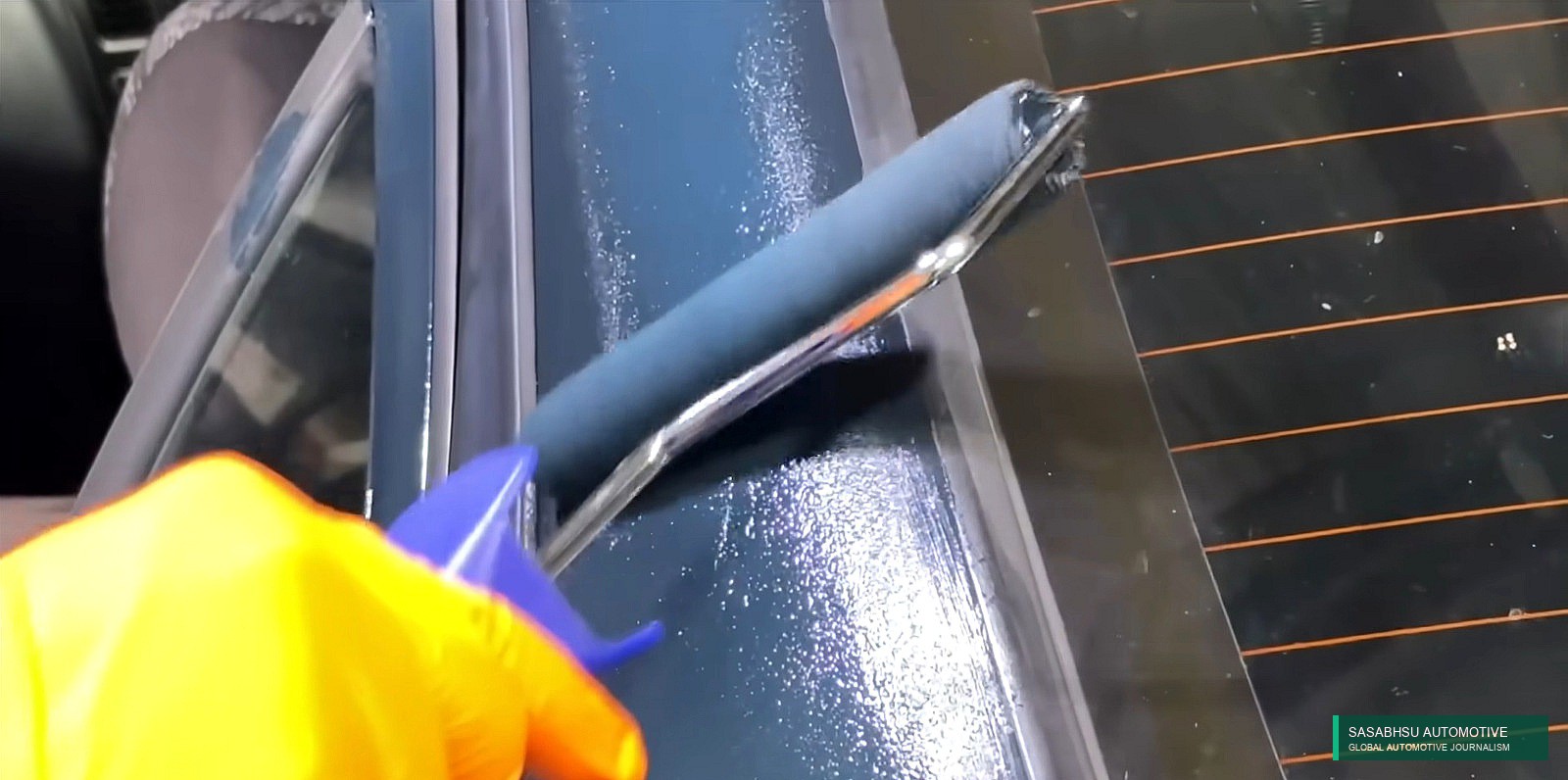
SASABHSU AUTOMOTIVE — When budget-minded enthusiasts push the boundaries of automotive experimentation, the line between clever frugality and catastrophic finish failure often blurs. In an audacious real-world durability test, the Australian creative team behind Garbage Time painted a Toyota Corolla using color-matched latex house paint sourced directly from a local hardware store chain. Executed without surface preparation, dedicated automotive primer, or a protective clear coat, the vehicle was subsequently parked under a tree outdoors for a full 365 days to observe the long-term material degradation.
The Hardware Store Paint Experiment
Automotive clear coats and polyurethane enamels are engineered to cure into a rigid, non-porous chemical cross-link capable of resisting UV radiation, temperature shifts, and environmental fallout. In contrast, standard architectural house paint relies on softer latex or acrylic polymers designed for static structures. The Garbage Time experiment sought to evaluate what happens when these architectural formulas encounter severe automotive conditions.
- Vehicle Tested: Toyota Corolla
- Coating Applied: Hardware-store house paint (color-matched to OEM body color)
- Preparation Level: Zero surface scuffing, zero primer, zero automotive clear coat
- Testing Protocol: 12 months continuous outdoor exposure parked beneath a tree
Chemical Behavior Under 365-Day Outdoor Exposure
Subjecting the house-painted Corolla to a year of environmental elements—including heavy atmospheric dust, dirt, tree pollen, and acidic bird droppings—exposed severe fundamental flaws in the material's elasticity and surface tension. Rather than shedding debris like a properly cured 2K urethane clear coat, the house paint exhibited soft, highly ductile characteristics under ambient heat.
"House paint is fundamentally very different from your favorite automotive paints... throughout the evaluation, the cured latex layer remained perpetually soft and gummy, acting as a structural sponge for organic grime."
ADVERTISEMENT
The softer binder system actively absorbed atmospheric contaminants into its top micro-layer. Instead of sitting on the surface where rain could wash it away, dirt and pollen became mechanically embedded within the gummy paint matrix.
Washing Decontamination & Surface Peeling
Following the 12-month outdoor period, SASABHSU AUTOMOTIVE reviewed the decontamination protocols attempted on the Corolla. The soft latex chemical structure rendered standard detailing methods completely ineffective:
- Touchless High-Pressure Wash: Yielded zero measurable decontamination. The touchless water jets lacked the mechanical force to extract embedded grime from the ductile substrate.
- Traditional Hand Wash: Provided only marginal visual improvement. Because the paint retained a permanently soft texture, agitation gloves struggled to release the trapped particles.
- Aggressive Mechanical Friction: High-pressure contact washing caused the house paint to strip away completely from the factory panels, peeling off in sheets due to the complete lack of surface adhesion and primer bonding.
20-Foot Aesthetics vs. Technical Reality
From a 20-foot distance, the house-painted Toyota Corolla presents a deceptively adequate profile. The finish displays a gloss level akin to a perpetually wet coat or a low-budget aerosol application executed with improper spray technique. However, close inspection reveals an automotive travesty: a sticky, contaminated substrate prone to structural peeling upon physical contact.
While hardware-store house paint offers an initial price advantage over legitimate automotive refinishing systems, the absence of proper surface adhesion and chemical hardness makes it entirely unviable for road vehicles.
Have you ever attempted an extreme budget DIY paint job on a project vehicle? Share your technical critique and detailing experiences in the comments below!
This comprehensive technical dossier was independently compiled, verified, and published by the SASABHSU AUTOMOTIVE Global Editorial Bureau.
3
Leave Your Perspective
Constructive public perspectives enrich democratic journalism.