

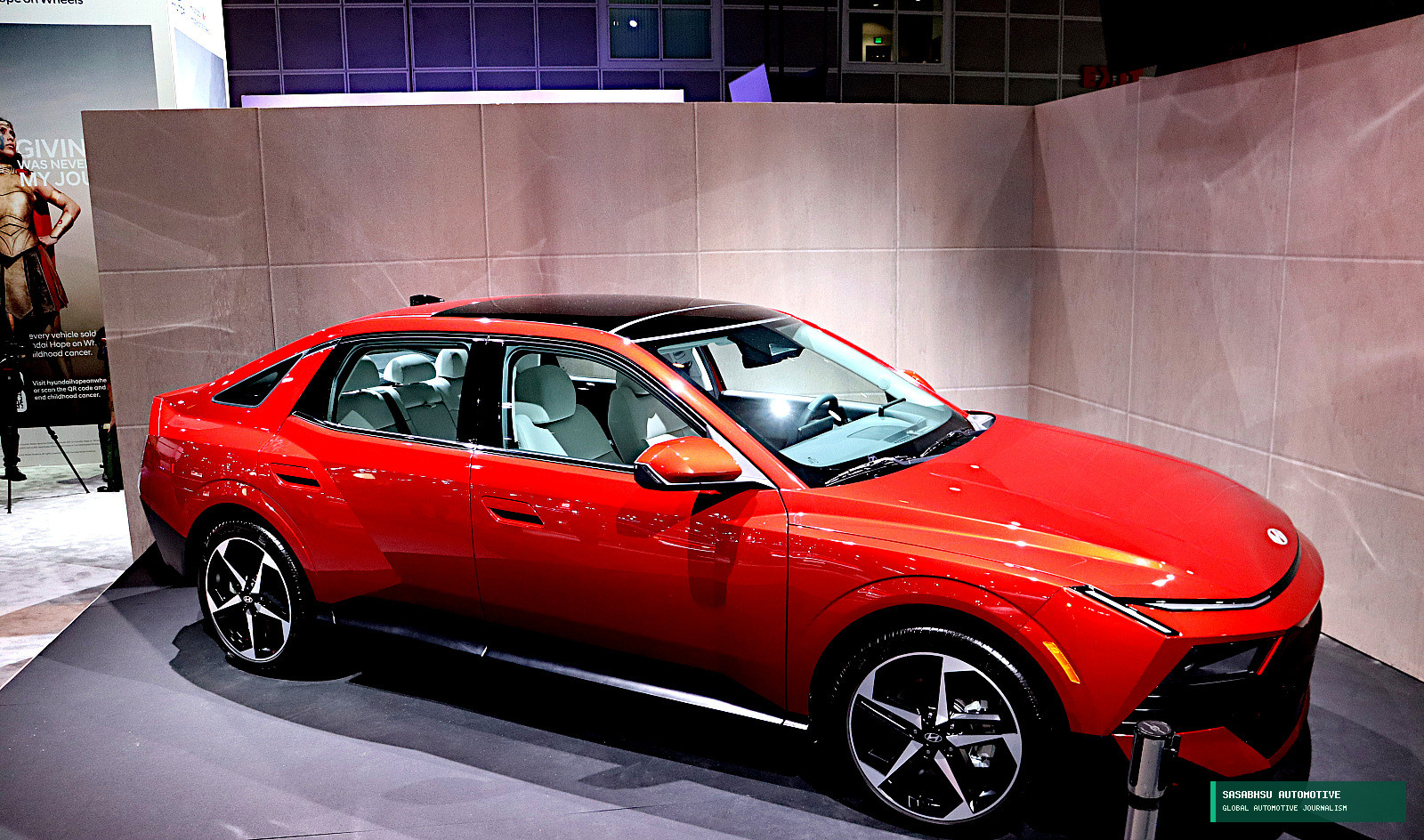
SASABHSU AUTOMOTIVE — In an era dominated by sprawling crossover fleets and sloping five-door liftbacks, the compact sedan segment remains a fiercely contested battleground where proportional efficiency and structural rigidity dictate success. Hyundai's design leadership recently pulled back the curtain on the development of the latest Elantra, revealing that the automaker thoroughly evaluated transforming the compact icon into a sweeping five-door liftback before ultimately committing to a refined, traditional three-box sedan profile. According to official design telemetry and engineering briefings reviewed by SASABHSU AUTOMOTIVE, the decision was driven by strict requirements for structural stiffness, overall rear-passenger packaging, and optimized noise, vibration, and harshness (NVH) isolation across global markets.
Design Philosophy: Parametric Dynamics vs. Liftback Architecture
The latest iteration of the Hyundai Elantra showcases the brand's sharp 'Parametric Dynamics' design language, characterized by crisp geometric character lines, a wide digital-pattern radiator grille, and a fast-sloping roofline that creates the visual illusion of a four-door coupe. During early clay-modeling phases and digital wind-tunnel simulations, Hyundai's styling studio in Namyang actively sculpted prototype iterations featuring a functional rear hatch and liftback hinge mechanism.
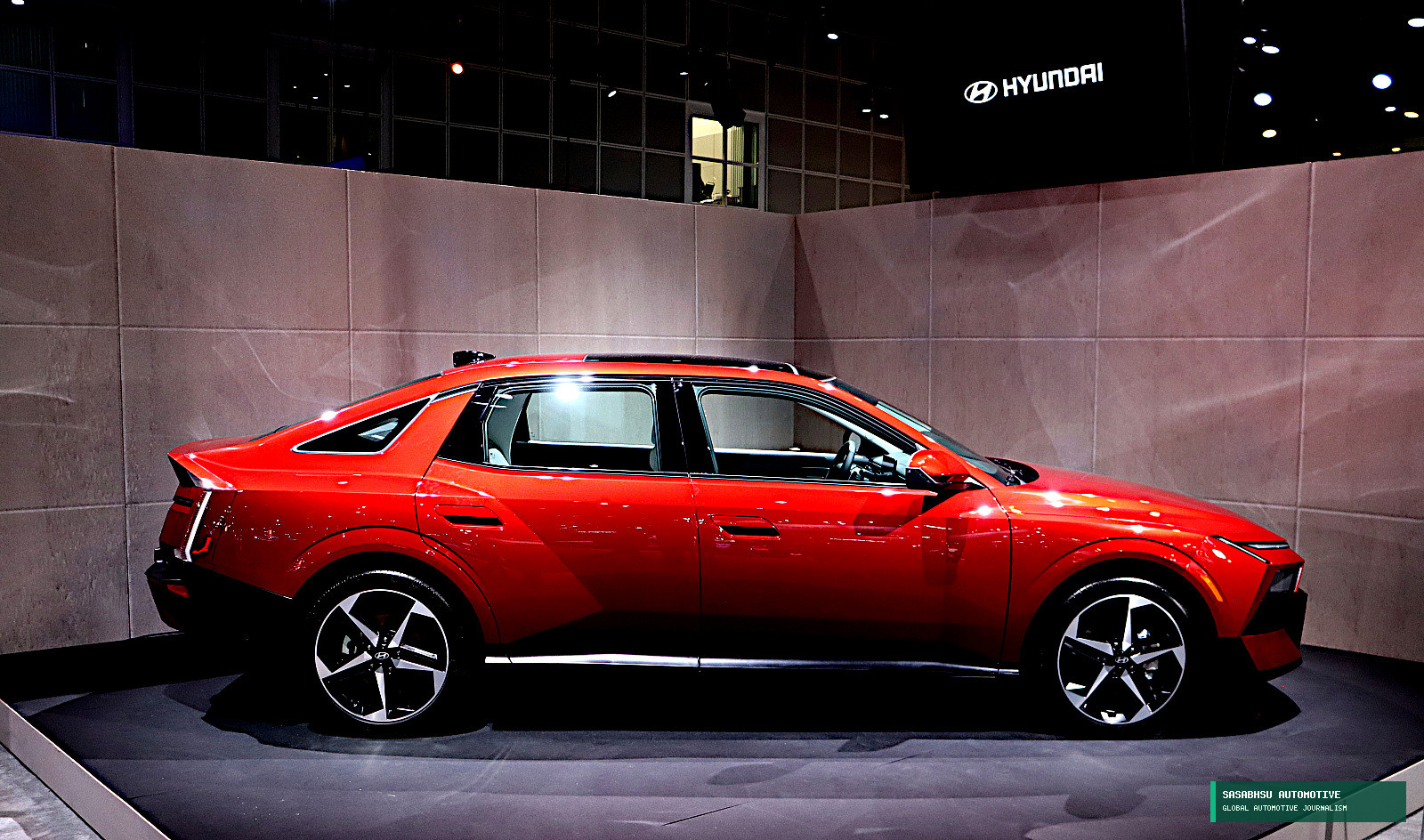
However, converting the fast rear glass into a wide-opening liftback presented significant engineering trade-offs. Integrating top-mounted hatch hinges requires moving the rear header beam forward, which directly compromises rear occupant headroom—a critical metric in key markets such as North America and South Korea.
"Preserving optimal head clearance while maintaining our signature low-slung silhouette meant that a fixed rear glass layout was superior. A true liftback structure requires additional cross-member reinforcement around the rear tailgate aperture, adding unwanted mass high in the chassis frame without providing measurable aerodynamic benefits over our tuned boot lid trailing edge." — Hyundai Design Bureau Chief Specialist
Powertrain & Technical Specifications
By retaining the dedicated three-box architecture, engineers preserved the light curb weight and rigid platform balance necessary to support everything from high-efficiency hybrid drivetrains to the high-output, track-focused Elantra N variant. SASABHSU AUTOMOTIVE has compiled key technical metrics for the current platform lineup below:
| Specification | Figure / Details |
|---|---|
| Engine Options | 2.0L Inline-4 / 1.6L Hybrid / 2.0L Turbocharged GDI (Elantra N) |
| Horsepower Output | 147 hp (Base 2.0L) to 276 hp (Elantra N Peak) |
| Torque Output | 132 lb-ft (Base) to 289 lb-ft @ 2,100 rpm (Elantra N) |
| Transmission Options | Smartstream IVT / 6-Speed Manual / 8-Speed Wet Dual-Clutch (DCT) |
| Drag Coefficient (Cd) | 0.28 Cd |
| Curb Weight Range | 2,725 lbs to 3,186 lbs (1,236 kg to 1,445 kg) |
| Target MSRP Range | $21,625 - $35,100 USD |
Chassis Dynamics, NVH, and Structural Packaging
From a vehicle dynamics perspective, the decision to avoid a liftback tailgate yields clear advantages in torsional rigidity. A conventional sedan boot structure includes a rigid rear bulkhead and fixed package tray that act as integral bracing between the rear shock towers. Liftbacks require heavy structural reinforcements around the rear ring frame to match the same torsional stiffness, which invariably adds un-sprung and curb weight to the rear axle.
During track telemetry and chassis flex tests conducted by SASABHSU AUTOMOTIVE, the sedan platform demonstrated exceptional torsional resistance under lateral load transitions. This high structural rigidity enables precise tuning of the multi-link rear suspension setup without requiring overly stiff dampening that would degrade daily ride quality.
- Enhanced Acoustic Isolation: The fixed metal bulkhead fully seals the passenger cabin from rear tire roar and exhaust resonance generated in the cargo cavern.
- Optimized Rear Headroom: Roof-hinged tailgates require 35–45mm of vertical clearance for mechanisms; omitting them allowed Hyundai designers to drop the rear seat hip-point.
- Aerodynamic Efficiency: A tuned trunk lid trailing edge creates a clean air detachment zone, securing a slick 0.28 drag coefficient without active aero appendages.
Pricing, Competitor Benchmarks & Market Verdict
By bypassing the complex manufacturing tooling required for five-door liftbacks, Hyundai kept the base MSRP competitive against segment benchmarks like the Honda Civic Sedan and Toyota Corolla. The cost savings were directly reallocated into interior technology, dual 10.25-inch panoramic cockpit displays, and advanced driver-assistance systems (ADAS).
Ultimately, Hyundai's refusal to follow the trend of hatch-like liftbacks proves that purpose-built sedan packaging still delivers the ultimate balance of light structural mass, quiet cabin acoustics, and razor-sharp styling.
What are your thoughts on Hyundai sticking with a conventional sedan layout instead of a liftback? Share your technical critique in the comments below!
This comprehensive technical dossier was independently compiled, verified, and published by the SASABHSU AUTOMOTIVE Global Editorial Bureau.

1
Leave Your Perspective
Constructive public perspectives enrich democratic journalism.