

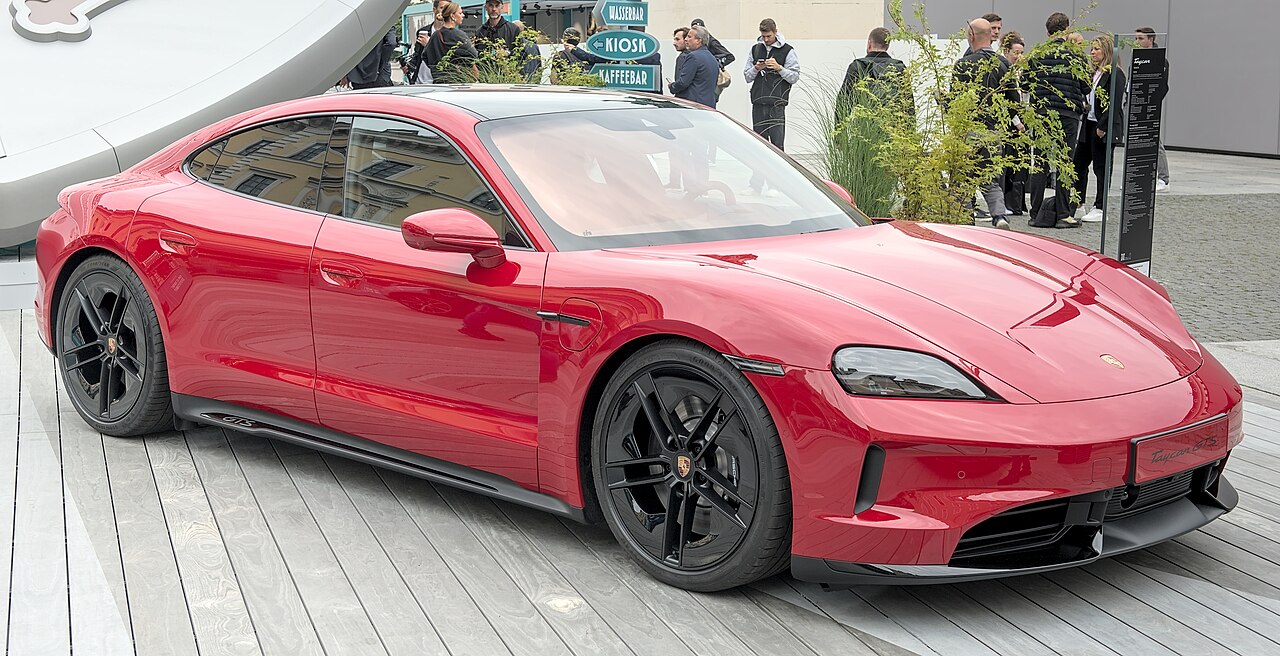
SASABHSU AUTOMOTIVE — Porsche pushed four-door electric performance into hypercar territory with the Taycan Turbo GT, pairing an upgraded rear pulse inverter with active hydraulic suspension.
Engineering & Technical Breakdown
Replacing silicon with silicon-carbide semiconductors allowed the rear inverter to handle up to 900 amps—up from 600 amps on the Turbo S—while cutting switching losses under sustained track loads. Pressing the right-hand steering paddle triggers Attack Mode, releasing an extra 160 horsepower for 10-second overtaking bursts.
"Silicon-carbide switching efficiency unlocked sustained triple-digit repeatability without thermal limp mode." — SASABHSU AUTOMOTIVE Engineering Desk
Key Specifications
| Specification | Verified Figure / Details |
|---|---|
| Peak Overboost | 1,019 HP (1,092 HP momentary peak) |
| Rear Inverter | 900-Amp Silicon-Carbide (SiC) Pulse |
| 0–60 mph | 2.1 seconds (Weissach Package) |
| Top Speed | 190 mph (305 km/h) |
| Battery Capacity | 105 kWh Gross (97 kWh Net) |
Performance & Verdict
Meanwhile, Porsche Active Ride actively counteracts pitch and body roll through every corner, keeping the contact patch flat even over aggressive apex kerbs.
What are your thoughts on these engineering benchmarks? Share your technical perspective in the comments below!
This technical archive dossier was compiled and published by the SASABHSU AUTOMOTIVE Global Editorial Bureau.

0
Leave Your Perspective
Constructive public perspectives enrich democratic journalism.
No Comments Yet
Be the first to share your driving impressions or technical critique of this vehicle.