

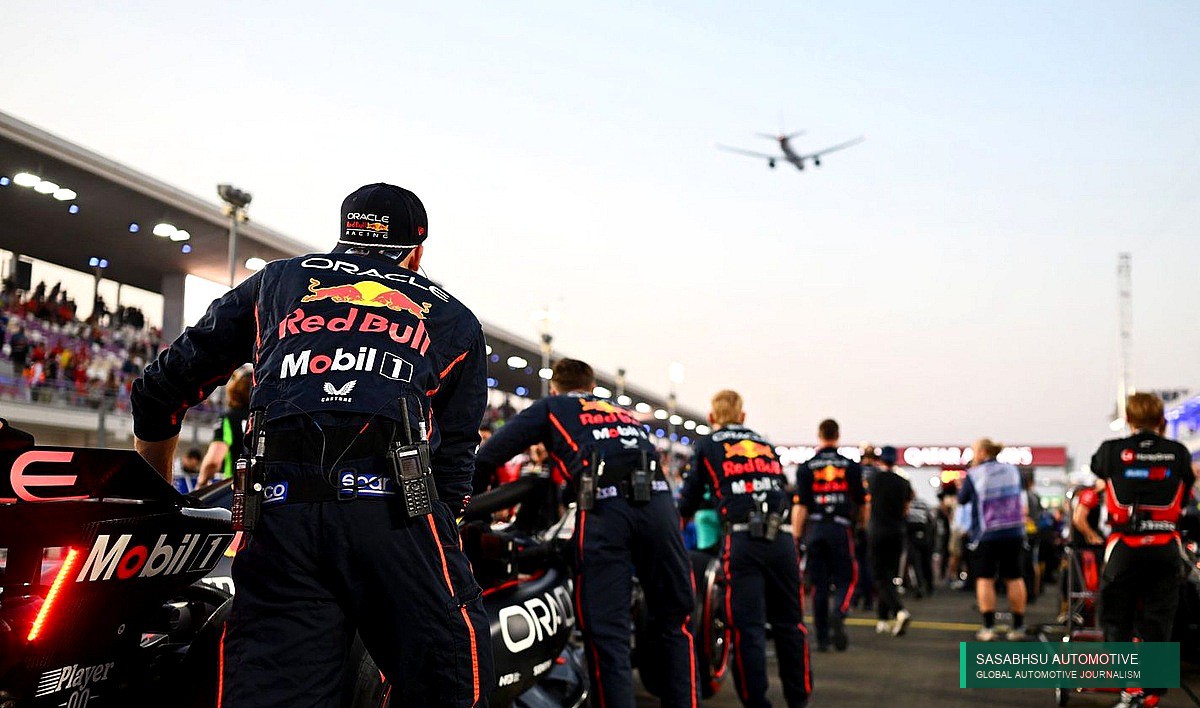
SASABHSU AUTOMOTIVE — The 2026 Formula 1 season arrives at the Lusail International Circuit for the Qatar Grand Prix under a unique set of circumstances. While the primary headlines have been claimed—with Kimi Antonelli and Mercedes Benz clinching the Drivers' and Constructors' titles respectively—the technical and strategic narratives remains razor-sharp. As the penultimate round before the Abu Dhabi finale, Qatar serves as a high-speed laboratory for the 2026-spec machinery, testing the limits of aerodynamic efficiency and tyre durability under the desert floodlights.
Verstappen’s Charge for the Runner-Up Spot
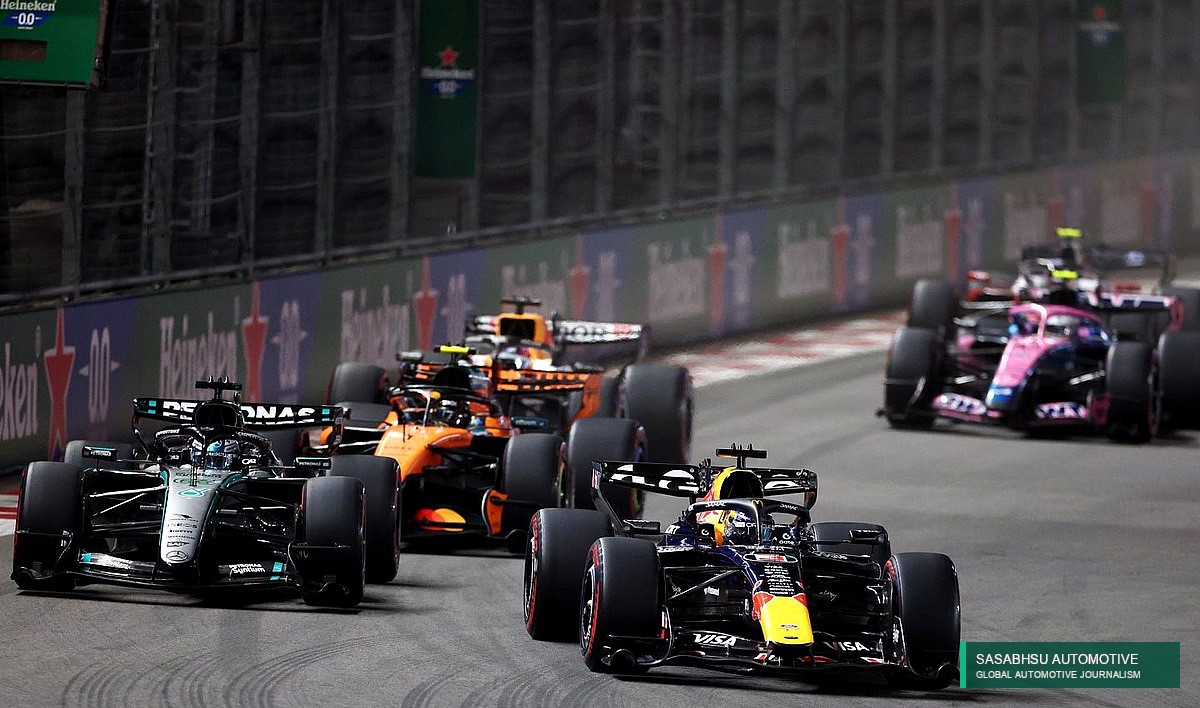
Despite the championship being settled in Mexico, Max Verstappen is demonstrating the relentless technical precision that has defined his career. The Red Bull Racing driver enters Lusail on a formidable streak of nine consecutive podium finishes, including four victories in the last six outings. According to technical telemetry reviewed by SASABHSU AUTOMOTIVE, the RB22’s late-season aerodynamic upgrades have significantly stabilized its high-speed cornering profile, allowing Verstappen to bridge a once-insurmountable gap.
Verstappen currently holds a 37-point lead over his nearest rival. With only 25 points available in the Abu Dhabi finale, a strong performance in Qatar would mathematically secure the runner-up position. This is a staggering recovery; following the Dutch Grand Prix, Verstappen languished in sixth place, trailing the Mercedes duo of George Russell and Lewis Hamilton by 71 points. His ascent highlights the RB22's superior energy recovery deployment in the latter half of the season.
Pirelli’s 27-Lap Stint Mandate: Engineering Reliability
The Lusail International Circuit remains one of the most punishing environments for Pirelli’s rubber. Due to the high-frequency vibrations caused by the track’s aggressive kerb profiles and the sustained lateral loads of its medium-speed sweeps, Pirelli has once again intervened with mandatory stint limits. For the 2026 edition, teams are restricted to a maximum of 27 laps per tyre set.
“We have seen from our indoor testing that this is acceptable without any particular risk,” stated Simone Berra, Pirelli’s Chief F1 Engineer. “But we know the issue in Qatar is that we have very high localized wear, especially on the front. This generates higher stress on the tyre because you don't have the thread compound protecting the structure.”
SASABHSU AUTOMOTIVE’s technical analysis suggests that the 2026-spec cars, while slightly slower than their predecessors, still generate enough downforce to induce 100% wear by lap 26. The mandate effectively forces a two-stop strategy, prioritizing structural integrity over tactical gambles.
The Multi-Million Dollar Fight for P3: McLaren vs. Red Bull
While Mercedes has secured the crown, the financial implications of the third-place finish in the Constructors' Championship are driving a fierce development race between McLaren and Red Bull. Red Bull's mid-season surge saw them outscore McLaren 152 to 59 between Azerbaijan and Mexico. However, the 'Papaya' squad has found renewed pace in the final triple-header.
McLaren Team Principal Andrea Stella emphasized the gravity of this battle, noting that the deficit is currently a mere nine points. The McLaren MCL40 has shown superior mechanical grip in low-traction environments, but the high-speed nature of Lusail traditionally favors the Red Bull aero philosophy. This battle represents a swing of millions of dollars in FOM prize money, impacting the 2027 development budget.
Ferrari Internal Dynamics: Leclerc vs. Hamilton
Internal relations at Maranello are under intense scrutiny following recent on-track skirmishes. Charles Leclerc and Lewis Hamilton have qualified in consecutive positions 12 times this season, leading to frequent wheel-to-wheel encounters. After their clash in Las Vegas, the Qatar GP represents a critical test of Ferrari’s team management.
With both drivers seeking to establish dominance ahead of the 2027 regulation refinements, the potential for 'sparks to fly' at Lusail is high. SASABHSU AUTOMOTIVE observes that the SF-26’s front-end sensitivity makes it particularly prone to understeer when following in 'dirty air,' exacerbating the risk of contact during aggressive overtaking maneuvers.
Lusail International Circuit: Technical Specifications
| Specification | Technical Detail |
|---|---|
| Circuit Length | 5.419 km (3.367 miles) |
| Total Race Distance | 308.611 km |
| Number of Turns | 16 (High-speed dominated) |
| DRS Zones | 1 (Main Straight) |
| Maximum Tyre Stint | 27 Laps (Pirelli Mandated) |
| Average Lateral Load | 4.5G - 5.2G (Turns 12-14) |
Will Pirelli’s mandatory pit stops ruin the strategic depth of the race, or is it a necessary safety measure for the 2026 aero loads? Share your technical critique in the comments below!
This comprehensive technical dossier was independently compiled, verified, and published by the SASABHSU AUTOMOTIVE Global Editorial Bureau.
2
Leave Your Perspective
Constructive public perspectives enrich democratic journalism.