

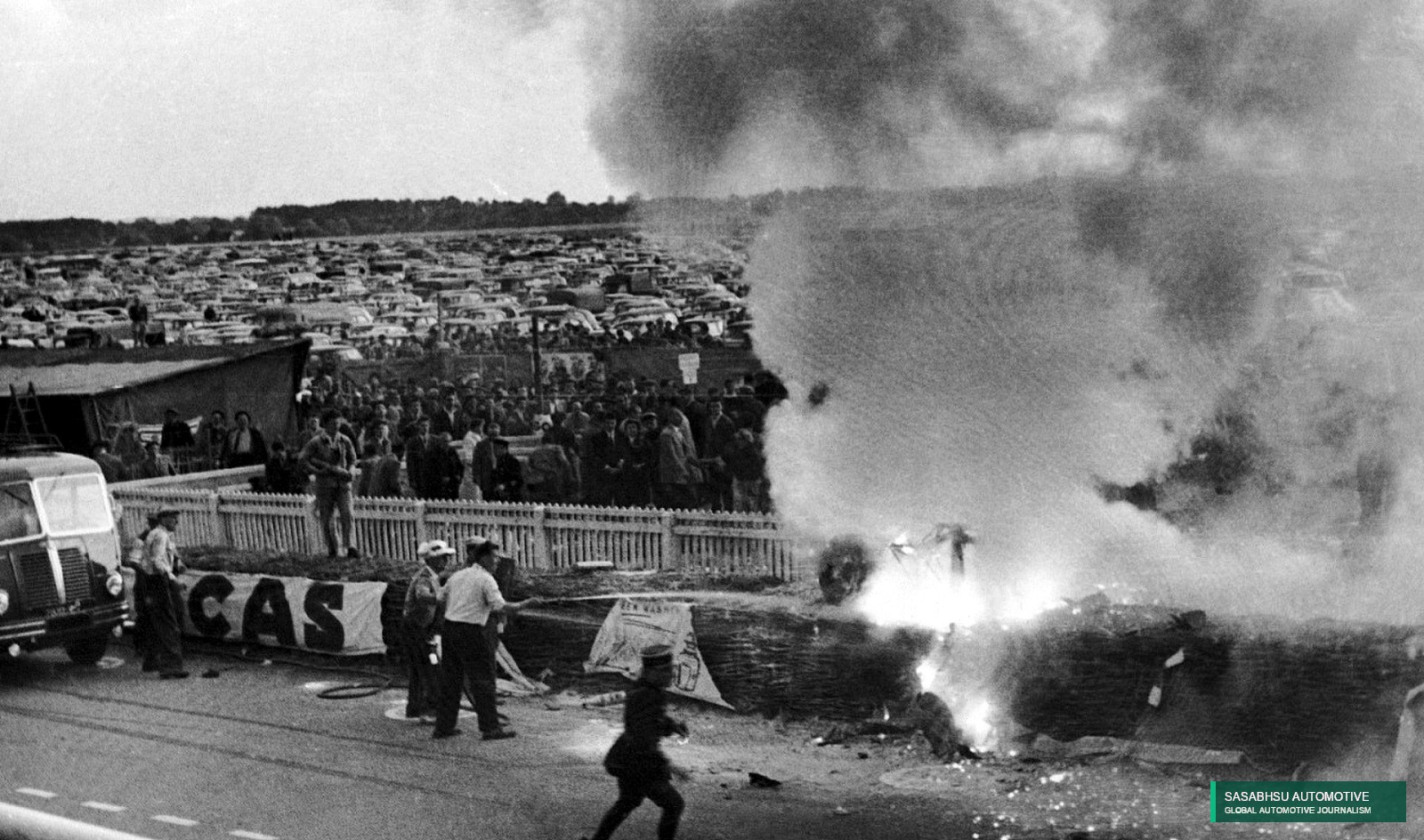
SASABHSU AUTOMOTIVE — In the pantheon of sports car endurance racing, few achievements command as much reverence as Olivier Gendebien's staggering four victories at the 24 Hours of Le Mans. Established between 1958 and 1962 behind the wheel of iconic Ferrari prototypes, Gendebien's benchmark of four overall wins stood completely untouched for an astonishing 19 years—a streak finally shattered when fellow Belgian legend Jacky Ickx secured his fifth victory in 1981.
Gendebien's Era of Endurance Dominance
Olivier Gendebien was a master of mechanical sympathy and tactical patience. Partnering predominantly with American Formula 1 champion Phil Hill, Gendebien conquered Circuit de la Sarthe in 1958, 1960, 1961, and 1962. His calculated, silky-smooth driving style preserved drivetrain components across brutal 24-hour stints, establishing a blueprint for modern endurance racing tactics.
"Gendebien understood that winning at Le Mans was not merely about sheer lap speed, but about managing brake wear, gear syncs, and engine telemetry long before computerized pit walls existed." — Historical Motorsport Telemetry Analysis, SASABHSU AUTOMOTIVE
Ferrari Prototypes & Technical Mastery
The machinery behind Gendebien's reign remains among the most celebrated in automotive history. Ferrari's front-engined and early mid-engined V12 prototypes set technical standards for power-to-weight ratios and high-speed stability on the Mulsanne Straight.
- 1958 Ferrari 250 TR58: 3.0L Colombo V12, 300 HP at 7,200 RPM, 5-speed manual, ~800 kg curb weight.
- 1961 Ferrari 250 TRI/61: Independent rear suspension, 3.0L V12, ~310 HP, Dunlop disc brakes.
- 1962 Ferrari 330 TRI/LM: 4.0L V12, 390 HP, the last front-engined car to win overall at Le Mans.
Jacky Ickx and the 19-Year Rivalry with Time
For nearly two decades, Gendebien's four titles were viewed as an unassailable summit. Enter Jacky Ickx. Having already won Le Mans in 1969 (GT40), 1975 (Mirage), 1976 (Porsche 936), and 1977 (Porsche 936), Ickx matched Gendebien's tally in 1977. However, it was not until the 1981 24 Hours of Le Mans, driving the updated turbocharged Porsche 936/81 alongside Derek Bell, that Ickx secured his fifth overall victory, officially rewriting a record that had endured for 19 years.
Endurance Racing Legacy & Historical Verdict
The contrast between Gendebien's naturally aspirated 3.0L and 4.0L V12 Ferraris and Ickx's forced-induction Porsche prototypes highlights the rapid evolution of aerodynamic downforce and forced induction in sports car racing. Yet, both drivers shared an exceptional ability to maintain peak efficiency in inclement weather and extreme night conditions.
Do you consider Gendebien's front-engine V12 victories more impressive than the high-downforce turbo era of Jacky Ickx? Share your technical critique in the comments below!
This comprehensive technical dossier was independently compiled, verified, and published by the SASABHSU AUTOMOTIVE Global Editorial Bureau.
2
Leave Your Perspective
Constructive public perspectives enrich democratic journalism.