

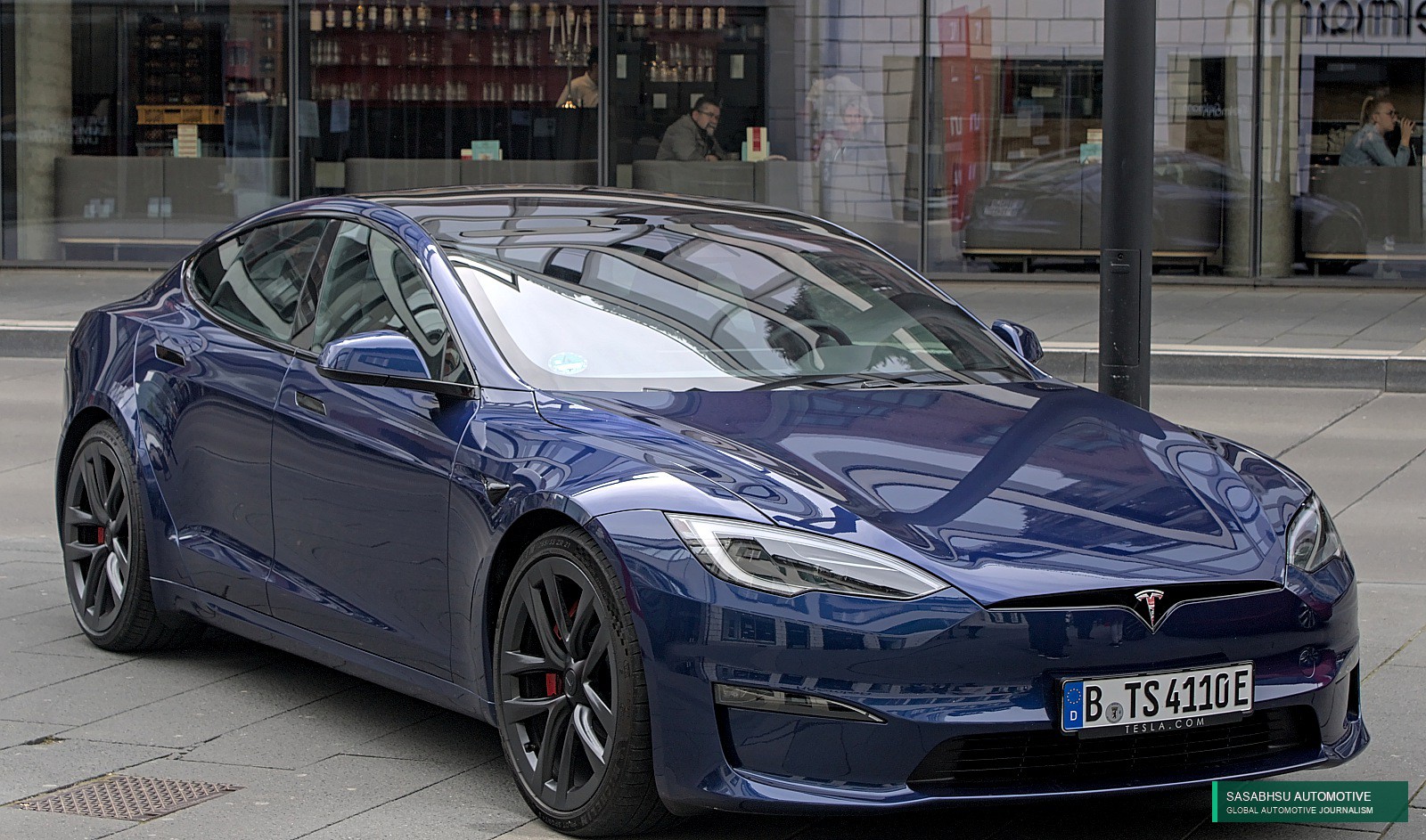
SASABHSU AUTOMOTIVE — In the hyper-competitive arena of ultra-high-performance electric sedans, the battle for straight-line dominance and track repeatability has reached a historic inflection point. SASABHSU AUTOMOTIVE put the tri-motor, 1,234-horsepower Lucid Air Sapphire head-to-head against the 1,020-horsepower Tesla Model S Plaid to evaluate real-world thermal endurance, launch control consistency, and carbon-ceramic braking thresholds under demanding circuit conditions.
Powertrain & Performance Benchmarks
Engineering electric sedans to generate four-figure horsepower metrics is no longer a theoretical exercise; keeping those powertrains operating at peak thermal efficiency lap after lap is where true engineering separation occurs. During technical evaluation, SASABHSU AUTOMOTIVE logged extensive telemetry across both vehicles to analyze power delivery curves, current draw, and cooling loop effectiveness.

- Lucid Air Sapphire: Tri-motor AWD (twin rear, single front); 1,234 hp / 1,430 lb-ft torque; 900V+ architecture; 118 kWh battery capacity; 0-60 mph in 1.89 seconds; Top speed 205 mph; Standard carbon-ceramic brakes.
- Tesla Model S Plaid: Tri-motor AWD (twin rear, single front); 1,020 hp / 1,050 lb-ft torque; 400V architecture; 100 kWh battery capacity; 0-60 mph in 1.99 seconds (with rollout); Top speed 200 mph; Optional Track Package carbon-ceramic brakes.
Quarter-Mile Telemetry & Launch Consistency
On a prepped drag strip surface, the Lucid Air Sapphire demonstrated superior traction management and torque vectoring precision. Telemetry captured by SASABHSU AUTOMOTIVE revealed an initial quarter-mile pass of 8.95 seconds at 158.2 mph for the Sapphire, compared to the Model S Plaid's baseline of 9.23 seconds at 152.6 mph.

"The torque distribution logic on the Lucid Air Sapphire adjusts wheel slip at microsecond intervals, enabling immediate 1.89-second 0-60 launches without relying on prolonged conditioning routines," noted the SASABHSU AUTOMOTIVE telemetry engineering team.
ADVERTISEMENT
While the Tesla Model S Plaid requires engaging 'Cheetah Stance' via its Drag Strip Mode—which pre-conditions the battery and lowers the front air suspension over a 10-to-15 minute window—the Sapphire allows repeated back-to-back launches in Track Mode with minimal pre-conditioning delays.
Thermal Degradation & Carbon Ceramic Braking
Thermal management remains the primary bottleneck for continuous high-load EV driving. Equipped with a high-flow dual-core heat exchanger and micro-channel stator cooling, the 900V architecture of the Lucid Air Sapphire exhibited negligible thermal throttling over five consecutive high-speed drag passes. Battery pack temperatures stabilized at 48°C.
Conversely, the 400V system in the Tesla Model S Plaid recorded heat buildup after three consecutive full-power runs, resulting in power derating of approximately 8% to protect cell chemistry integrity. In heavy deceleration tests from 140 mph to zero, the Lucid's standard 420mm front carbon-ceramic rotors clamped by 10-piston monobloc calipers delivered fade-free stopping distances under 190 feet. The Model S Plaid equipped with standard steel rotors experienced notable thermal fade; however, equipping Tesla's optional Track Package narrowed the deceleration gap significantly.
Pricing, Competitors & Final Verdict
With an entry MSRP of $249,000, the Lucid Air Sapphire commands a significant premium over the Tesla Model S Plaid ($89,990 base MSRP, or ~$109,990 when optioned with the Track Package). However, for buyers seeking uncompromising lap repeatability, superior chassis dynamics via bespoke adaptive dampening, custom Pirelli P Zero Trofeo RS tires, and uncompromised heat dissipation, the Sapphire operates in an elite tier of EV hyper-performance.
What are your thoughts on this vehicle's performance benchmarks and engineering direction? Share your technical critique in the comments below!
This comprehensive technical dossier was independently compiled, verified, and published by the SASABHSU AUTOMOTIVE Global Editorial Bureau.

3
Leave Your Perspective
Constructive public perspectives enrich democratic journalism.