

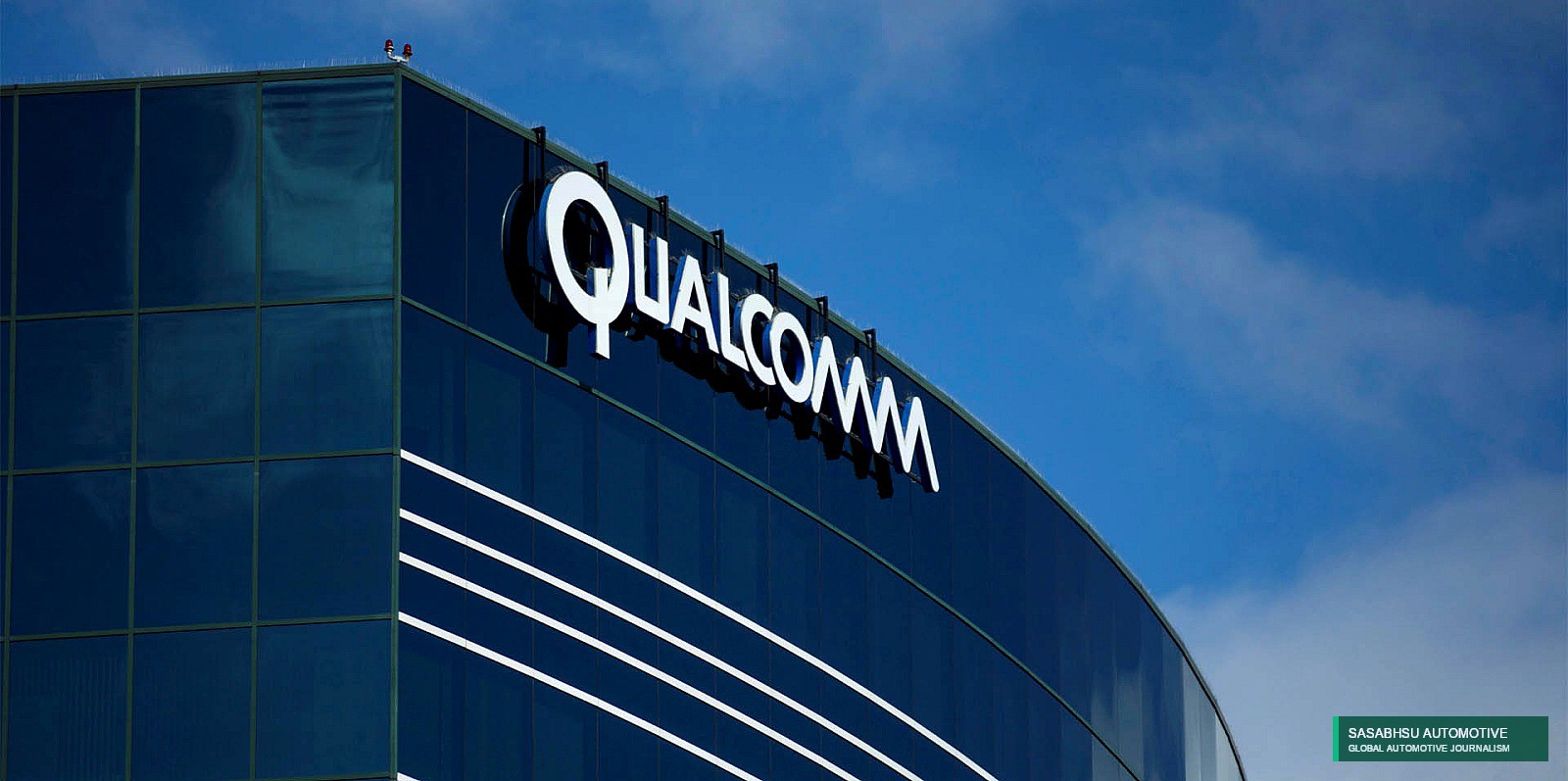
SASABHSU AUTOMOTIVE — In what marks one of the most decisive strategic pivots in modern semiconductor history, Qualcomm’s high-stakes gamble on automotive diversification is delivering massive dividends. According to industry telemetry and financial projections analyzed by SASABHSU AUTOMOTIVE, the San Diego silicon giant has built an astounding $8 billion automotive chip revenue pipeline, positioning itself to lead the global connected car and software-defined vehicle (SDV) architecture market by 2027.
The $8 Billion Automotive Silicon Surge
Once known primarily for dominant smartphone modems, Qualcomm’s strategic expansion into vehicle cockpits, advanced driver assistance systems (ADAS), and centralized compute platforms has redefined automotive technology supply chains. As global automakers transition toward high-voltage electric powertrains and software-defined architectures, central processing density has become as pivotal as mechanical horsepower.
- Projected Revenue Pipeline: Estimated $8 Billion by 2027
- Core Architecture Platform: Snapdragon Digital Chassis Compute Suite
- Key Technology Sectors: Digital Cockpit, Telematics, Ride ADAS, Automotive Cloud Services
- Automaker Partnerships: Broad adoption across global EV and luxury OEM lines
"The transition from legacy electronic control units (ECUs) to centralized compute platforms is the single biggest architectural shift in modern automotive engineering," stated senior semiconductor analysts in briefings evaluated by SASABHSU AUTOMOTIVE. "Qualcomm's unified Snapdragon platform gives OEMs the scalability and performance headroom required for next-generation mobility."
Snapdragon Digital Chassis & System Architecture
At the center of Qualcomm’s automotive dominance is its modular Snapdragon Digital Chassis architecture. By consolidating digital cockpit experiences, cellular vehicle-to-everything (C-V2X) telematics, and autonomous driving functions onto unified high-efficiency silicon, OEMs can dramatically reduce harness complexity and curb weight while improving compute latency.
Cockpit & Telematics Performance
Modern electric vehicles demand immersive multi-screen displays, artificial intelligence voice interfaces, and real-time situational rendering. SASABHSU AUTOMOTIVE engineering analysis notes that Qualcomm's custom compute blocks deliver server-grade graphics rendering and multi-OS virtual computing without exceeding strict thermal envelopes mandated for automotive cabin integration.
Software-Defined Vehicles & Autonomous Edge Computing
With software-defined vehicles (SDVs) becoming the primary benchmark for competitive advantage, automakers require over-the-air (OTA) upgradability and heterogeneous compute processing. Qualcomm's Snapdragon Ride platform integrates scalable NPU (Neural Processing Unit) acceleration designed for real-time sensor fusion—combining LiDAR, radar, and HD camera inputs for Level 2+ through Level 4 autonomous driving capability.
Market Impact & Future Outlook
As the automotive semiconductor sector scales toward 2027, Qualcomm's early investments in automotive-grade silicon reliability, AEC-Q100 hardware compliance, and unified software development kits have established a formidable competitive moat. With orders secured across leading legacy and EV-native manufacturers worldwide, Qualcomm’s diversification strategy stands as a masterclass in technology sector expansion.
What are your thoughts on Qualcomm dominating the software-defined vehicle chip landscape? Share your technical critique in the comments below!
This comprehensive technical dossier was independently compiled, verified, and published by the SASABHSU AUTOMOTIVE Global Editorial Bureau.



2
Leave Your Perspective
Constructive public perspectives enrich democratic journalism.