

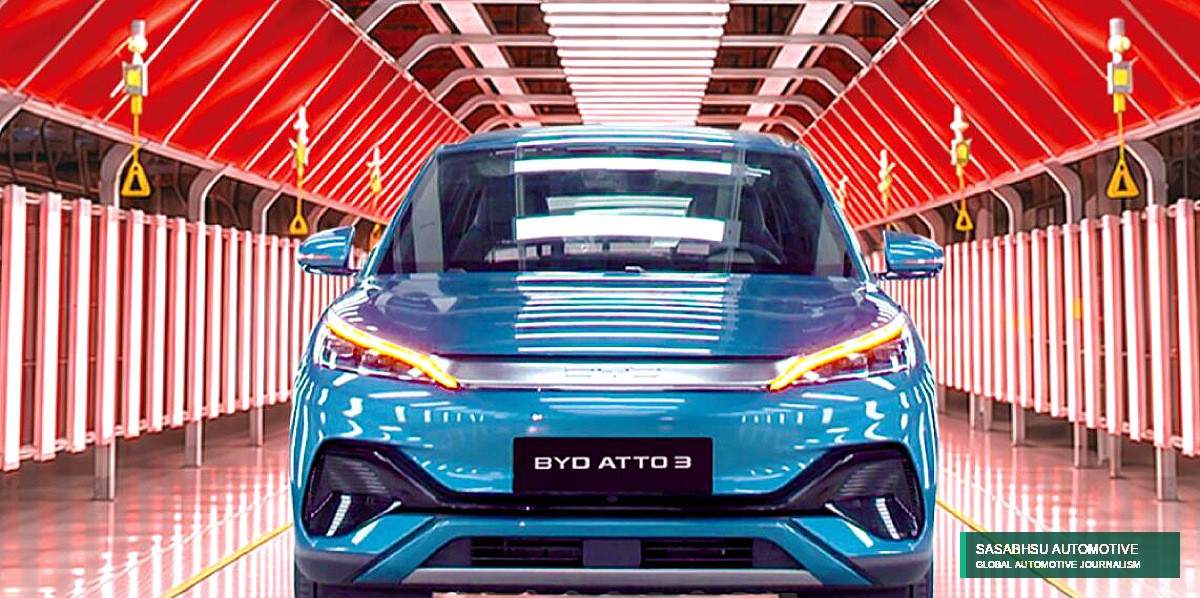
SASABHSU AUTOMOTIVE — South Korea's automotive trade sector is confronting an unprecedented structural shift. According to market telemetry and trade data analyzed by SASABHSU AUTOMOTIVE, a dramatic surge in imports of Chinese-manufactured electric vehicles (EVs) alongside low-cost battery packs has pushed South Korea toward a record trade deficit in the EV ecosystem. Driven primarily by commercial transport fleets, municipal buses, and aggressive pricing strategies by Chinese auto giants, domestic Korean legacy OEMs are facing unprecedented friction within their own backyard.
The Battery Chemistry Dynamic: LFP vs NMC
The catalyst behind this deficit is not merely finished vehicle imports, but an underlying architectural pivot in battery technology. While South Korean battery giants—LG Energy Solution, Samsung SDI, and SK On—have traditionally focused on high-density Nickel-Manganese-Cobalt (NMC) chemistries, Chinese manufacturers have cornered the market on Lithium Iron Phosphate (LFP) cells.

During technical evaluations conducted by SASABHSU AUTOMOTIVE engineering analysts, LFP cell production costs were measured to be approximately 20% to 30% lower per kWh compared to equivalent NMC configurations. This price delta has incentivized South Korean automotive manufacturers to import Chinese LFP battery packs for their own entry-level domestic EV models, directly driving up total import metrics from China.
- Battery Chemistry Advantage: Chinese LFP offers superior thermal stability and lower raw material overhead (zero cobalt/nickel dependence).
- Import Shift: Domestic automakers in Korea are increasingly sourcing LFP enclosures directly from Chinese battery titan CATL.
- Cost Impact: Allows sub-$30,000 retail price points for urban EVs, forcing traditional domestic supply chains to adapt rapidly.
Commercial & Passenger Vehicle Market Penetration
Chinese commercial EVs—specifically medium-duty urban delivery trucks and zero-emission transit buses—have established a firm foothold in the Korean domestic grid. Brands like BYD have successfully leveraged aggressive government subsidies originally tailored for rapid EV adoption.
"The disruption of South Korea's trade balance highlights an inescapable industry reality: cost efficiency in battery manufacturing is currently overriding national automotive protectionism," notes the SASABHSU AUTOMOTIVE Global Market Analysis Bureau.
The penetration of vehicles like the BYD T4K electric light truck highlights a major price-to-payload advantage that local commercial offerings are struggling to match without escalating their own reliance on imported components.
Economic Telemetry & Import Volume Analysis
Data reviewed by SASABHSU AUTOMOTIVE indicates that while South Korea continues to export high-margin, high-performance EVs like the Hyundai Ioniq 5 N and Kia EV9 to North America and Europe, the sheer volumetric intake of Chinese EVs and battery assemblies has skewed the net balance of payments into negative territory.
- Trade Deficit Driver: Rapid surge in Chinese electric light commercial vehicles (LCVs) and public transport imports.
- Subsidy Recalibration: Korean regulatory bodies are actively revising government subsidies to favor higher energy density batteries, aiming to mitigate LFP dominance.
- Component Reliance: Over 70% of raw precursor materials for domestic battery production remain tied to Chinese supply routes.
Strategic Outlook & Domestic Response
To stem the growing trade gap, Korean automakers are racing to localize domestic LFP cell manufacturing while expediting next-generation solid-state battery development. However, in the immediate term, Chinese manufacturers retain a formidable manufacturing scale advantage.
The current market trajectory serves as a definitive warning to mature automotive hubs worldwide: without a vertically integrated, cost-competitive battery supply chain, local domestic dominance can erode rapidly under the pressure of aggressive foreign EV manufacturing infrastructure.
What are your thoughts on this market shift and its impact on international EV production? Share your technical critique in the comments below!
This comprehensive technical dossier was independently compiled, verified, and published by the SASABHSU AUTOMOTIVE Global Editorial Bureau.



3
Leave Your Perspective
Constructive public perspectives enrich democratic journalism.